The Twelve Days of Nativity – On the Second Day

(A Countdown to Jesus’ Birthday)

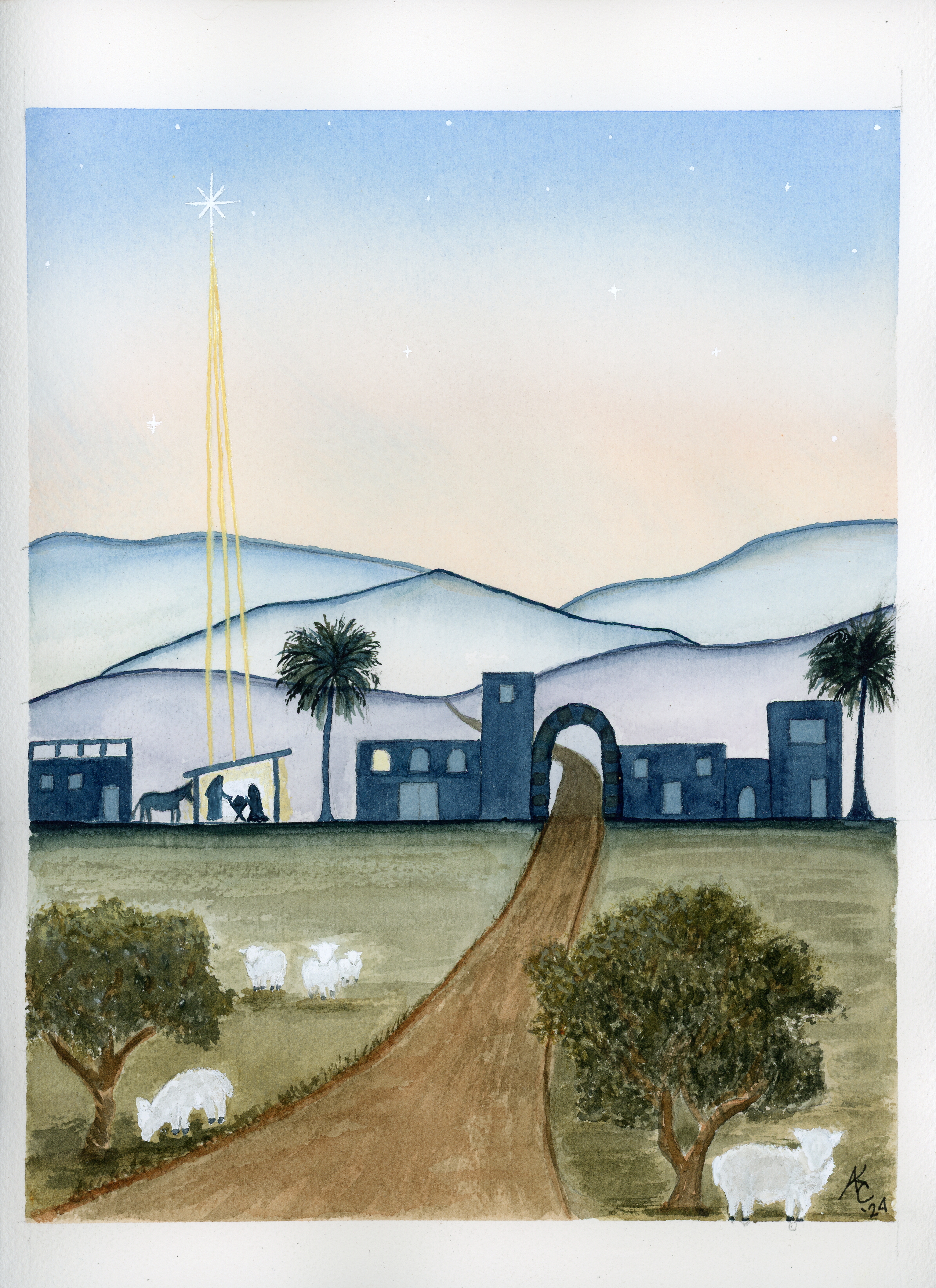
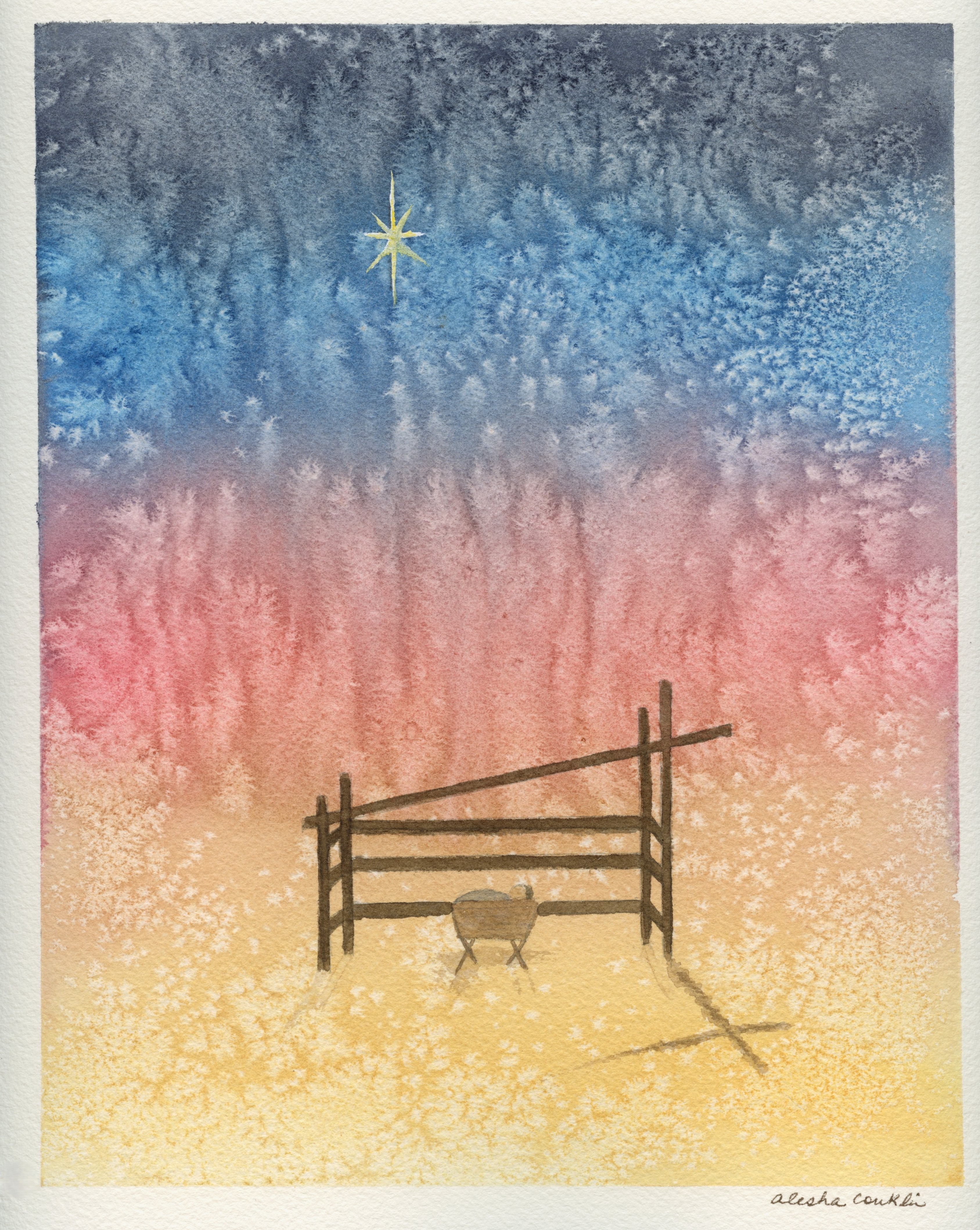
On the second day of nativity – God provided a manger, when the world had no room.

Luke 2:7 – “And she brought forth her firstborn son, and wrapped him in swaddling clothes, and laid him in a manger; because there was no room for them in the inn.”

A manger is a feeding trough, where they put the hay, straw and vegetables for the animals to eat.

We have no idea if Joseph and Mary found the manger in a stable, a barn, a cave or in a lean-to behind some busy inn.

We only know that when the baby Jesus was born, there was a soft place to lay Him.

How precious the Psalms must have been to Mary and Joseph, as they lived out this tremendous story of absolute faith in God. I can imagine them whispering these verses of comfort to one another, as they huddled together awaiting the birth of the Christ child.

Psalm 119: 49-52 – “Remember the word unto thy servant, upon which thou hast caused me to hope.
This is my comfort in my affliction: for thy word hath quickened me.
The proud have had me greatly in derision: yet have I not declined from thy law.
I remembered thy judgments of old, O LORD; and have comforted myself.”

In the midst of our difficult circumstances, when we are in pain and without a friend to provide comfort, when we do not know how to provide our family’s most basic needs, we can rest in the truth that God takes care of His own.

God will meet every need as you travel through this life, walking in obedience to His commands.

There will be a soft place to rest, even in the midst of your trial.

II Corinthians 4:3-4 – “Blessed be God, even the Father of our Lord Jesus Christ, the Father of mercies, and the God of all comfort;
Who comforteth us in all our tribulation, that we may be able to comfort them which are in any trouble, by the comfort wherewith we ourselves are comforted of God.”

The Twelve Days of Nativity – On the First Day

(A Countdown to Jesus’ Birthday)

On the First Day of Nativity – God provided the Messiah to a virgin in the family of David, in the city of Bethlehem, just as He’d promised.

We first see the promise of One who would overcome Satan in Genesis 3:14-15. We also hear God’s promise to Abraham in Genesis 22:8 that God would provide Himself a Lamb.

We read the prophesy in Isaiah 7:14 – “…Behold, a virgin shall conceive, and bear a son…”

And in Micah we find “But thou, Bethlehem Ephratah…out of thee shall he come forth unto me that is to be ruler in Israel…”

God clearly set out a plan for the birth of the Saviour of the world. In Luke we see the culmination of that promise.

Luke 1:26-27 “…the angel Gabriel was sent from God…To a virgin espoused to a man whose name was Joseph, of the house of David; and the virgin’s name was Mary.”

Luke 2:4-5 “And Joseph also went up from Galilee…unto the city of David, which is called Bethlehem; (because he was of the house and lineage of David:)
To be taxed with Mary his espoused wife, being great with child.”

Although the nation of Israel was looking for the coming Saviour, they made so many assumptions about how He would come. They were looking for a King.

They were not expecting Him to come to a young virgin girl and an upright carpenter who would’ve quietly divorced her, were it not for an angelic visitor in the middle of the night.

Quite often, the Lord will do His work in a completely unexpected way. He will use people who seem unqualified and unskilled. He will work quietly instead of with great pomp. He will use the weakest of this world to accomplish the truly great deeds.

If you are waiting on God to fulfill a promise to you, keep your eyes open to His working and moving. Stay in His Word daily to be attuned to the slightest movement toward that promise. Be wise to keep a humble, obedient spirit as you daily do the things you know are right to do each day.

God will show up in His time and in His way: maybe with a chorus of angels, or a bright star, or with a shout and a trump…and maybe with a still small voice.

If He promised, He will provide.

Thirty Days of Thanksgiving in Psalms Day 30

Psalms 147:7 – Sing unto the LORD with thanksgiving; sing praise upon the harp unto our God:

This final verse of thanks finds us with Nehemiah, after the walls had been rebuilt, when they’d found the book of the Law and read it out to all the people.

When the children of Israel heard how they were supposed to be living, they fasted and repented. Then they had a covenant written which the men signed, and all the people promised by an oath that they would walk in God’s law.

After that the singer’s sang this Psalm of praise, worship and thanks to the Lord.

Once again, the goodness of God in bringing them back into their land, and allowing the Law to be discovered so they would know how to please Him, had moved the children of Israel to sing to the Lord in gratitude.

When we go to church today, let’s consider the hymns and songs we sing with a heart of thanksgiving to our God. He has poured out multiple blessings on us, more than we can count!

And we should be challenged as we enter into the season of celebrating His birth, to view it through the lens of gratitude. His coming as a baby is the fulfillment of the promise given to Eve in Genesis 3. Even though she and Adam disobeyed, God already had a plan of redemption in place.

Although His children did not keep His covenant, and failed to live by His Law, He offered them a space for repentance; and now He offers to all of us a better way of salvation through the perfect Lamb of God who has been offered up for our sins.

Every day should be overflowing with thanks, praise, worship and gratitude to our great God for our great Saviour, Jesus Christ.

**************************

Our journey through Thanks in Psalms is over. Thank you so much for studying it along with me. I’ve been so challenged to start looking at my life with more thanksgiving to the Lord. I have no room for bitterness, anger or sadness when my heart is full of thanks. And sin looks different when I am constantly thanking God for His goodness. I pray that I don’t lose this new point of view.

May God richly bless you, my friends.

Thirty Days of Thanksgiving in Psalms Day 29

Psalm 140:13 – Surely the righteous shall give thanks unto thy name: the upright shall dwell in the presence.

Once again, David is fleeing for his life from Saul. There are spies everywhere. He has no idea who is loyal to him and who is feeding information to Saul.

He’s gathered a ragtag group of people with him, along with his brothers and family. I Samuel 22:2 says that the men who came to support David were those in distress, those in debt, and everyone who was discontented.

This wouldn’t have been a boost to most people’s confidence. But thankfully, David’s confidence wasn’t in himself. His faith was in God.

His words were big on faith. He prayed, “Deliver me, O LORD…preserve me…” And later he says “Keep me, O LORD…preserve me…”

Even though David’s deliverance didn’t come immediately, we know that ultimately he was safe from Saul and was made King of Israel. Because of his faith, he could give thanks to God and know that he lived in God’s presence.

Whose confidence do we walk in? When the way before us is unclear, the path behind us is filled with traps, nets and snares, and we don’t know who to trust, do we throw yourself on the deliverance of God?

My friend, as David tells us, the “righteous” will give thanks to God for deliverance, and the “upright” live in God’s presence. A righteous person is one who is holy in heart and observant of divine commands (the Word of God). “Upright” means to be honest and just.

If we want the Lord’s deliverance, we need to live God’s way. David knew that his preservation depended on his obedience. And at least during this stage of his life, he got that right. Later on, David had some serious stumbles, and the Lord did not deliver him from the consequences of those sins.

We need to learn the principle that God wants our heart. He wants to be assured of our thanksgiving because we are upright and live righteously. If we don’t live according to His Word, why would we want to give Him thanks?

Living according to God’s Word goes hand-in-hand with the joy of thanksgiving.

Thirty Days of Thanksgiving in Psalms Day 28

Thirty Days of Thanksgiving in Psalms Day 28

Psalms 136:26 – O give thanks unto the God of heaven: for his mercy endureth for ever.

I’m sure you’ve noticed by now that all twenty-six verses in Psalm 136 end with the phrase “for his mercy endureth for ever.”

Since this a psalm, that means it’s a song; and this phrase would be the “chorus” to the song. It must’ve been beautiful to hear it sung in Hebrew!

We also find the repeating phrase “To him…”

What follows this phrase each time is a description of everything from creation to the overthrow of Pharaoh to the taking of the Promised Land. It’s a song of intense worship to God for Who He is and what He had done for the children of Israel.

It can be difficult, in a time of trial, to remember all of God’s goodness or His mighty acts on our behalf. But if we have a written list of God’s mercies in our life, we can look back and rejoice that the One who has carried us this far will continue to do so.

We would be wise to consider writing our own “stanzas” to this song for our families, but also for the edification of our own hearts. Journaling is a good way to keep track of God’s blessings, answers to prayer and miracles.

Or we could always do as the Lord commanded Joshua in Joshua 4, and make a nice pile of rocks! God told Joshua to leave a pile of rocks at the edge of the Jordan River as a memorial to God’s making a path for them as they came into the Promised Land.

God told them “that when your children ask their fathers in time to come, saying, What mean ye by these stones: Then ye shall answer them, That the waters of Jordan were cut off before the ark of the covenant of the LORD…and these stones shall be for a memorial unto the children of Israel for ever.” (Joshua 4:6-8)

It is a wise practice to keep track of God’s goodness. There will be a day when we are low, or when we are facing a storm, and we’ll need to remind ourselves of the merciful acts of God in our lives. It will help us face the next challenge that comes along.

What stanza would you pen today to add to this song about the God’s mercy?

Thirty Days of Thanksgiving in Psalms Day 27

Psalm 136:3 – O give thanks to the Lord of lords: for his mercy endureth for ever.

In verse one of this chapter, we saw that David used the word “LORD” in all upper case letters, as he referred to the English equivalent of the Hebrew name of God.

Here in verse three, the use of the lower case “o”, “r” and “d” indicates that David is referencing the character of God as our master.

Lord – a master, a husband, a nobleman, a ruler or governor; in Scripture, the Supreme Being, Jehovah
Master – one who rules, one who has supreme dominion

This name of God shows us that He has followers under His authority. That’s us! And from personal experience, I can give a testimony that God is a Lord like no other lord.

He leads like no other.
He always instructs His followers in the right direction.
He guards them and protects their way.
He is compassionate when they are wounded or hurting.
He is longsuffering when they are being stubborn and not submissive.
He encourages His followers with His Word, and His Spirit guides them from within.
He gently corrects them patiently, but He will also give stern punishment to bring them back into fellowship with Himself.

What a wonderful Lord He is! He is a master above all others.

I am so thankful that He rules my life so well. I know that I can trust Him to be good all the time.

I’d love to hear from you today! What are you thankful for when it comes to God being your Lord? How has God been a good master in your life?

Thirty Days of Thanksgiving in Psalms Day 26

Psalm 136:2 – O give thanks unto the God of gods: for his mercy endureth for ever.

According to Bible scholars, this Psalm was written after King David brought the ark of the covenant, with its mercy seat, back into Jerusalem, many decades after it had been taken by the Philistines.

I think verse two must’ve been inspired by the marked contrast between the gods of the Philistines and Israel’s God. That contrast is vividly described in I Samuel 4:1 – 7:2.

The ark of the covenant wasn’t just a piece of furniture. God tells Moses in Exodus 25:22 “And there I will meet with thee, and I will commune with thee from above the mercy seat…”

The mercy seat sat on top of the ark. This was where the Israelites met with God. There was no tabernacle, no temple, no synagogue, no church building and no eternal salvation of the soul. The only place of communion with their God was the mercy seat on top of the ark of the covenant.

It was important. It was sacred. It was a holy place.

At one point in Israel’s history we read that the Philistines took the ark in battle. It’s almost humorous to read how God mocked their gods and idols; but it’s heart-breaking to read how many suffered and died due to their taking of the ark.

It was very powerful – more powerful than any other god or idol because it was the representation of the presence of God Almighty. No one and no thing could stand before it. It was dreadful to see the power of God move against those who opposed His instructions.

There is no god like our God. There is no god greater than our God. This was David’s point in verse two, as he reminisced about the way the ark of the covenant brought down the gods of the Philistines. And he was thrilled and thanking God for its return to its rightful place in Jerusalem.

The ark of the covenant and the mercy seat pointed toward the New Testament Christian who is now the dwelling place of the Spirit of the Lord. There we can commune with Him on the seat of our hearts, because of His enduring mercy.

From the Old Testament to the New, our God is the God above all gods. And He deserves our thanks, because His mercy endures for ever.